PM Modi Launches ₹3,000 Crore Project Package on Janjatiya Gaurav Diwas 2026
Prime Minister Narendra Modi inaugurated and laid foundation stones for 246 development projects worth around ₹3,000 crore during the Janjatiya Gaurav Diwas programme on 15 November. This report in our HilluBhai news updates explains the announcement, its tribal-development focus and the difference between completed facilities and future construction.
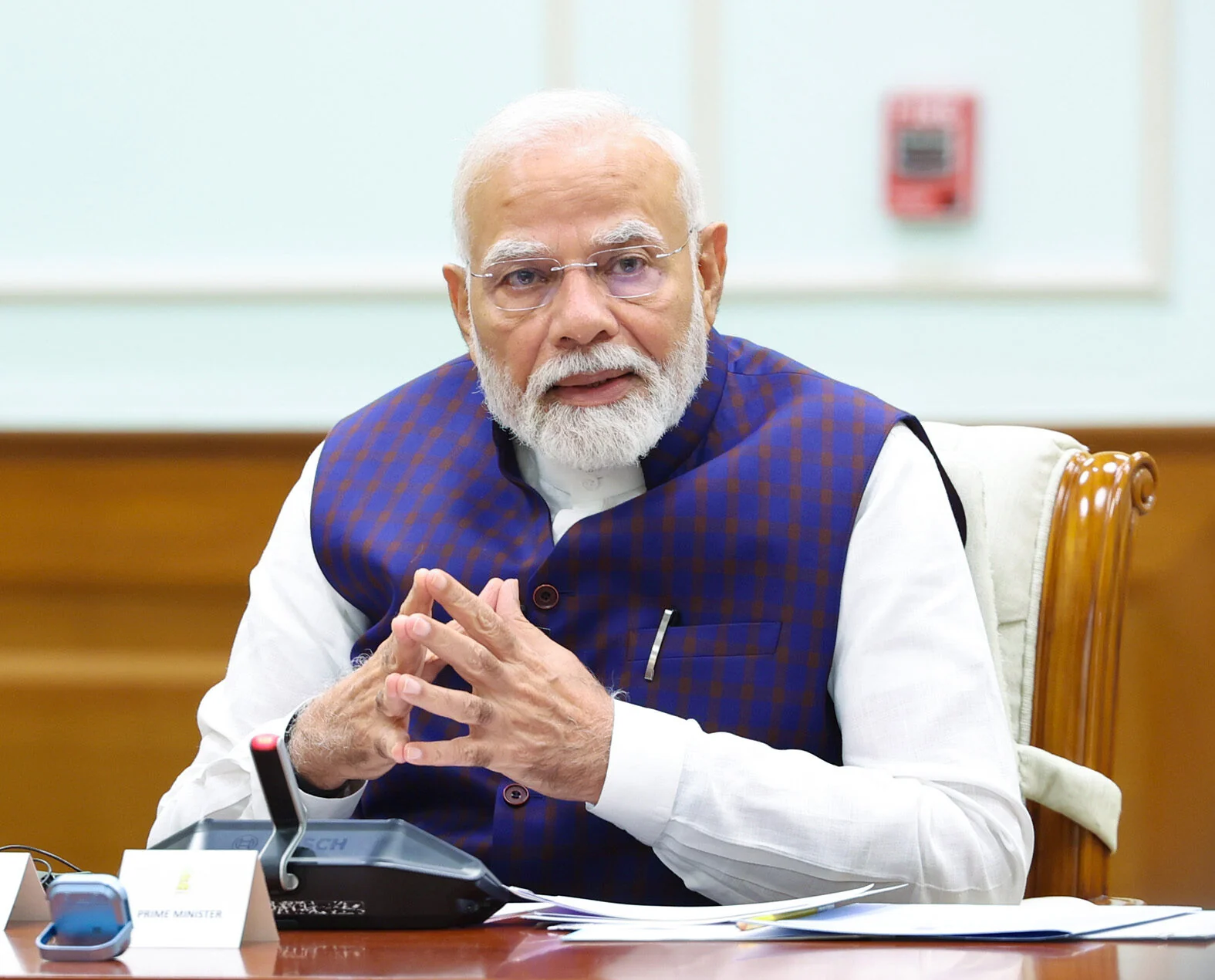
Archive photograph: PM Modi at a semiconductor executives roundtable on 10 September 2024, not the Janjatiya Gaurav Diwas event. Photo: Prime Minister’s Office, Government of India / Wikimedia Commons, GODL-India. Source: commons.wikimedia.org/wiki/File:Narendra_Modi_government.jpg. Resized and converted to WebP.
Where did the announcement take place?
The Prime Minister joined the programme in Gadchiroli, Maharashtra, by video conference, according to the PMO release. The observance marked the 151st birth anniversary of Birsa Munda and recognised the heritage and contributions of tribal communities.
| Key detail | Government announcement |
|---|---|
| Date | 15 November 2026 |
| Programme | Janjatiya Gaurav Diwas, Gadchiroli |
| Participation | PM Modi joined by video conference |
| Projects | 246 |
| Combined value | Around ₹3,000 crore |
What kinds of projects are included?
The official account identifies education facilities, healthcare services, tribal-product marketing centres and rural infrastructure. It also names a museum dedicated to Ropuiliani in Mizoram and a new Tribal Research Institute building in Arunachal Pradesh.
These are distinct categories of public investment. A school, a research institute and a marketing centre serve different purposes, so the combined monetary value should not be mistaken for one uniform benefit paid to every household.
Inauguration and foundation stone: why the distinction matters
An inauguration generally marks a facility entering use or being formally opened. A foundation-stone ceremony marks the start of a project phase and does not mean the completed service is already available.
The package includes both. Readers assessing a local project should look for its individual status, implementing agency and operational arrangements rather than assuming all 246 are at the same stage.
Why Janjatiya Gaurav Diwas provides the context
The government presents the day as recognition of tribal history and contributions to the country. The development announcements connect that commemoration with public services and cultural institutions.
The practical importance for residents will depend on whether facilities are accessible, staffed and maintained. Construction cost is one measure of a project; regular service delivery is another.
What to watch after the announcement
For projects still to be built, useful updates include work schedules, progress reports and eventual commissioning. For facilities already opened, the next questions concern operating hours, eligibility where relevant and the services actually available.
No individual application deadline or direct cash entitlement is established by the combined package announcement. Any scheme-specific benefit should be checked against its own published rules.
How to assess a project in your own area
Start with the facility’s exact name and location. A national package can contain projects in several states, so a headline describing the combined value does not show how much is assigned to an individual village or district. The local project notice is the more useful document for that question.
Next, identify the stage reached. If the project has been inaugurated, ask which services are open and who operates them. If a foundation stone has been laid, ask about the published construction milestones and the agency responsible. These questions help turn a large announcement into information that residents can actually use.
Different investments need different measures of progress
An education facility can be assessed through access, staffing and regular teaching. A health facility requires operational services and dependable staffing. A marketing centre is useful when producers can understand its arrangements and reach buyers. A cultural institution has a different role again, preserving knowledge and making it accessible to visitors and researchers.
For that reason, there is no single statistic that establishes the success of every project in the package. The amount announced gives a sense of scale; the quality and continuity of each service determine its everyday value. Both kinds of information are necessary for meaningful follow-up.
Why cultural recognition and services appear together
The programme combines commemoration with development announcements. Remembering a historical figure and improving a public facility serve different purposes, but both can be part of a community’s relationship with public institutions. The announcement should be understood in that context without suggesting that a ceremony alone delivers the eventual service.
Residents also bring knowledge that a project headline cannot capture: the difficulty of reaching a location, seasonal access problems, the languages used by visitors and whether opening hours fit local needs. Those practical questions can make the difference between a building existing and a service being usable.
Useful information to keep after the announcement
Save the individual project name, the responsible department and any published contact or progress information. Compare later updates with the original scope rather than only with the combined national total. If access or eligibility is unclear, ask the operating department for the specific rule instead of assuming a general announcement creates a universal entitlement.
This approach supports a clearer follow-up report: what was announced, what has opened, what remains under construction and what residents can use now. It also keeps the public discussion focused on delivery after the ceremony.
Reporting sources: Prime Minister’s Office release through PIB, 15 November 2026, on the Gadchiroli Janjatiya Gaurav Diwas programme.




Post Comment