PM Surya Ghar Yojana: Subsidy, Rooftop Costs and a Smarter Solar Checklist
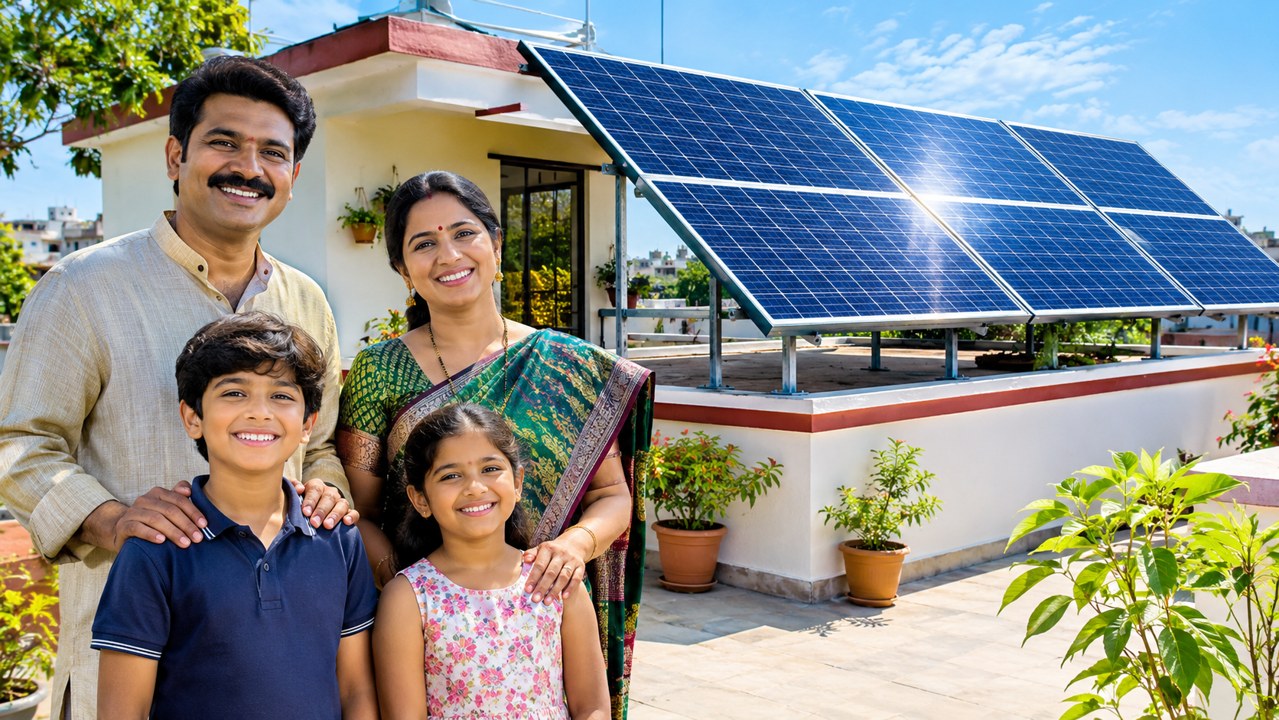
A sunny roof can be an opportunity to reduce electricity purchases, but a solar decision should begin with more than a subsidy headline. Roof condition, electricity use, the vendor’s quotation and your DISCOM’s process all affect the project. PM Surya Ghar Yojana should be understood as a rooftop-solar programme with installation and approval stages.
This guide explains the published subsidy framework and the questions worth asking before paying a vendor. It does not promise a zero bill or a particular financial return. Information was reviewed on November 10, 2026; the live national portal and your DISCOM should confirm the applicable subsidy and technical conditions.
The published residential subsidy framework
The government’s scheme announcement describes central assistance of ₹30,000 for a one-kilowatt system, ₹60,000 for two kilowatts and ₹78,000 for three kilowatts or more under the stated standard framework. Applicable geography, technical requirements, prior assistance and current guidelines must be checked for the specific installation.
The programme aims to help households generate electricity through rooftop solar. The phrase “up to 300 units” should not be read as an unconditional cash payment or a promise that every household’s bill disappears. Generation and billing depend on the installed system and local arrangements.
| System size | Published standard central assistance |
|---|---|
| One kilowatt | ₹30,000 |
| Two kilowatts | ₹60,000 |
| Three kilowatts or more | ₹78,000 under the stated cap |
| Final project cost | Depends on the vendor quotation and scope |
| Electricity savings | Depend on generation, use and billing rules |
| Final eligibility | Confirm through portal and DISCOM |
Check the roof before comparing prices
Look for usable space, shade and the condition of the structure. Ask the installer how water drainage, access and maintenance will be handled. A low quotation is less attractive if the mounting arrangement creates avoidable problems for the building.
Request a site-specific assessment rather than accepting an estimate based only on a photograph. Nearby trees, buildings and rooftop structures can affect sunlight. Ask the vendor to explain any generation assumption and whether the proposed layout leaves safe access for cleaning and future repairs.
Match capacity to actual electricity use
Collect recent electricity bills and review consumption across different seasons. A single high summer bill may not represent the entire year. Discuss how the system size relates to your pattern of use, roof space and connection conditions.
Ask for estimates stated clearly as estimates. If the quotation predicts monthly generation or savings, find out what assumptions support it. Do not compare two offers solely by the claimed bill reduction when their system sizes, equipment or included services differ.
Get a quotation you can understand
A useful quotation identifies the panels, inverter, mounting structure, electrical protection, installation work and the responsibilities for approval-related steps. Ask whether taxes, metering-related charges and any additional work are included or excluded. Obtain written clarification before making a payment.
Compare warranty coverage and the process for service calls. Who responds if the inverter stops working? Is there a local contact? What documentation will you receive after commissioning? A clear answer about after-sales support can matter as much as a small difference in the initial price.
Keep a copy of the offer and payment schedule. Avoid a vague promise that the “government pays everything.” Subsidy eligibility, project price, any loan and the household’s own contribution are separate amounts that should be visible in the financial plan.
Follow the portal and DISCOM sequence
Begin with the official national portal and the instructions for your state and electricity distributor. Confirm registration, technical approval, vendor selection, installation, inspection and subsidy-claim steps as they apply to the current process. Do not assume that an installer’s private form replaces the government application.
Keep application references and copies of approvals, invoices and commissioning records. Make sure the electricity-consumer details and beneficiary banking information are accurate. If a document is corrected, preserve both the correction acknowledgement and the updated version.
The guidelines include technical eligibility conditions such as domestic-content requirements for subsidised installations. Ask the vendor to confirm compliance in writing and retain the equipment documentation. A completed installation is not enough if the scheme’s conditions for assistance have not been met.
Understand financing separately from subsidy
If you are considering a loan, compare the current interest rate, repayment period, fees and total repayment with your budget. A subsidised project can still involve a borrowing obligation. Do not assume that expected savings will always match the monthly instalment.
Ask what happens if subsidy processing takes longer than expected. Clarify when loan repayments begin and how a later subsidy credit is treated. These questions should be answered by the lender and the official process, not only by the sales representative.
Review the first bills after installation
After commissioning, compare the installation records with actual generation information and electricity bills. Check that metering and billing are operating as expected. If something appears wrong, take the relevant readings, dates and bill to the vendor or DISCOM, depending on the issue.
Keep maintenance instructions accessible and follow the equipment’s safe-use guidance. Do not climb onto a roof or alter electrical components simply to investigate a low-generation day. Use qualified assistance for technical work.
PM Surya Ghar is easier to evaluate when the subsidy, installation cost and expected savings are kept separate. A sound decision comes from a suitable roof, a clear quotation and a documented approval process. Those checks give a household a stronger basis for choosing solar than a promise of permanently free electricity.
Related guide: PM Awas Yojana Gramin.
Related guide: Atal Pension Yojana.
Official sources
- Government subsidy announcement
- National solar portal
- Official implementation guidelines
- Government programme explainer
Featured image: AI-generated illustration; people shown are not identified scheme beneficiaries.





1 comment