Janakpur–Ayodhya Weekly Train: 604-Km Route, Stops and Latest Launch Update
Indian Railways has approved a weekly service linking Janakpur Dham in Nepal with Ayodhya Cantt in Uttar Pradesh over approximately 604 kilometres. This travel report in our HilluBhai news updates sets out the official route and separates the approved service from the reported plans for its inauguration.
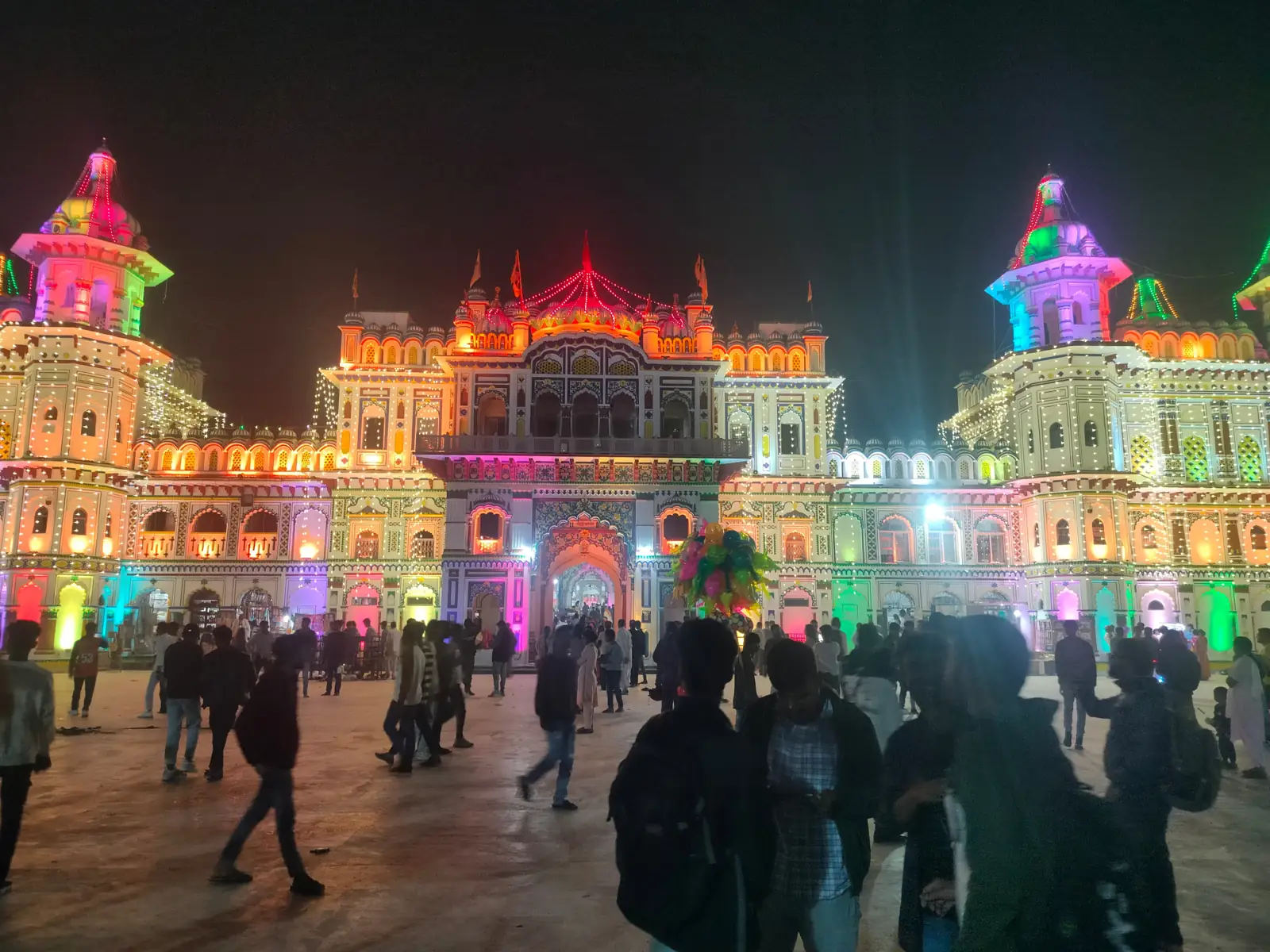
Photograph: Janaki Mandir, Janakpur, Nepal, May 2025; destination photograph, not the new train. Photo: Baap8969 / Wikimedia Commons, CC0. Source: commons.wikimedia.org/wiki/File:Janaki_Mandir_Janakpur_Nepal.jpg. Resized and converted to WebP.
What has been officially approved?
The Ministry of Railways announced the approval on 14 November. Its statement gives Saturday as the originating day from Janakpur Dham and Monday from Ayodhya Cantt.
| Item | Officially announced detail |
|---|---|
| Terminals | Janakpur Dham–Ayodhya Cantt |
| Distance | Approximately 604 km |
| Frequency | Weekly |
| From Janakpur Dham | Saturday |
| From Ayodhya Cantt | Monday |
Which stops are listed?
The government’s commercial-stop list includes Jaynagar, Madhubani, Shisho, Sitamarhi, Raxaul, Narkatiaganj, Gorakhpur, Basti, Mankapur and Ayodhya Dham, in addition to the terminal stations.
Ayodhya Dham and Ayodhya Cantt are different station names in the announcement. Travellers should check the terminal and boarding station on the actual ticket rather than treating the names as interchangeable.
What is the latest launch report?
The Kathmandu Post’s 16 November report says the leaders of Nepal and India are expected to inaugurate the connection on 23 November. That is a reported plan, not evidence that the commercial service has already begun.
The approval release does not provide a complete passenger timetable, train number or fare table. This article therefore does not invent departure times or promise that reservations are already open.
Why the route is significant
Janakpur and Ayodhya are closely connected in Ramayana tradition. A direct weekly rail option is intended to make travel between the religious destinations more convenient and improve cross-border passenger connectivity.
For travellers, the practical value depends on the final schedule and how it connects with the rest of their trip. A weekly frequency requires more planning than a daily service, especially for the return journey.
Before making a booking
Wait for the operational notice and confirm the service date, train number, timetable and reservation arrangements through official railway channels. Check applicable travel-document requirements for your nationality and itinerary; a rail announcement alone does not settle border-entry rules.
Allow for onward travel between the station and your accommodation or pilgrimage destination. The published distance describes the railway connection, not the distance between hotel doors or temple entrances.
The photograph shows Janaki Mandir in 2025. It is an authentic destination image, not a photograph of the newly approved train.
Plan the outward and return journeys together
A weekly service offers a useful connection but leaves fewer alternatives within the same week than a daily train. Before building an itinerary around it, compare both originating days with the length of stay you want. The most convenient outward journey may still require a different return arrangement.
Allow time for travel between the railway station and the places you want to visit. A route announcement gives station-to-station information; it does not establish local transfer times, accommodation availability or how long a visit to a religious site will take.
Why the terminal names deserve a separate check
Ayodhya Cantt is listed as a terminal, while Ayodhya Dham appears among the commercial stops. The distinction affects where a traveller boards, where someone should arrange a pickup and which station should be entered into a journey search.
The same principle applies on the Nepal side and at intermediate stops: use the exact station shown in the operational timetable rather than only the broader city name. Similar-sounding destinations can lead to a different result in a booking search.
Approval, inauguration and ordinary service are separate stages
An approval establishes that the railway has authorised the service. An inauguration is a ceremonial or initial operation. Regular commercial running requires the passenger information that makes a journey bookable, such as the notified schedule and reservation arrangements.
Those stages can be discussed close together in news coverage, which is why a headline about a launch can appear before a traveller can confirm the ordinary timetable. Read the wording carefully and wait for the operating notice when making a time-sensitive plan.
What information should be confirmed before departure?
Keep a checklist covering the train number, boarding date, station, class, arrival date and return option. For a cross-border itinerary, separately confirm the current document and entry requirements that apply to you. Do not assume another traveller’s nationality or circumstances make their experience a complete guide to your own.
Also consider how you will receive updates while travelling. Save the itinerary and useful official contact details somewhere accessible without relying entirely on a mobile-data connection. Share the correct station and arrival date with anyone meeting you.
A destination connection with practical limits
The cultural link between Janakpur and Ayodhya makes the approval notable, but the eventual convenience will depend on the final operating details. This report supplies the announced distance, frequency and stops while leaving unannounced fares and departure times open. That makes it a planning reference rather than a substitute for the final timetable.
Reporting sources: Ministry of Railways PIB release, 14 November 2026; The Kathmandu Post launch-planning report, 16 November 2026. Inauguration timing remains a reported expectation.


Post Comment