November Supermoon 2026: Peak Time, the Moon Illusion and What to See After Full Moon
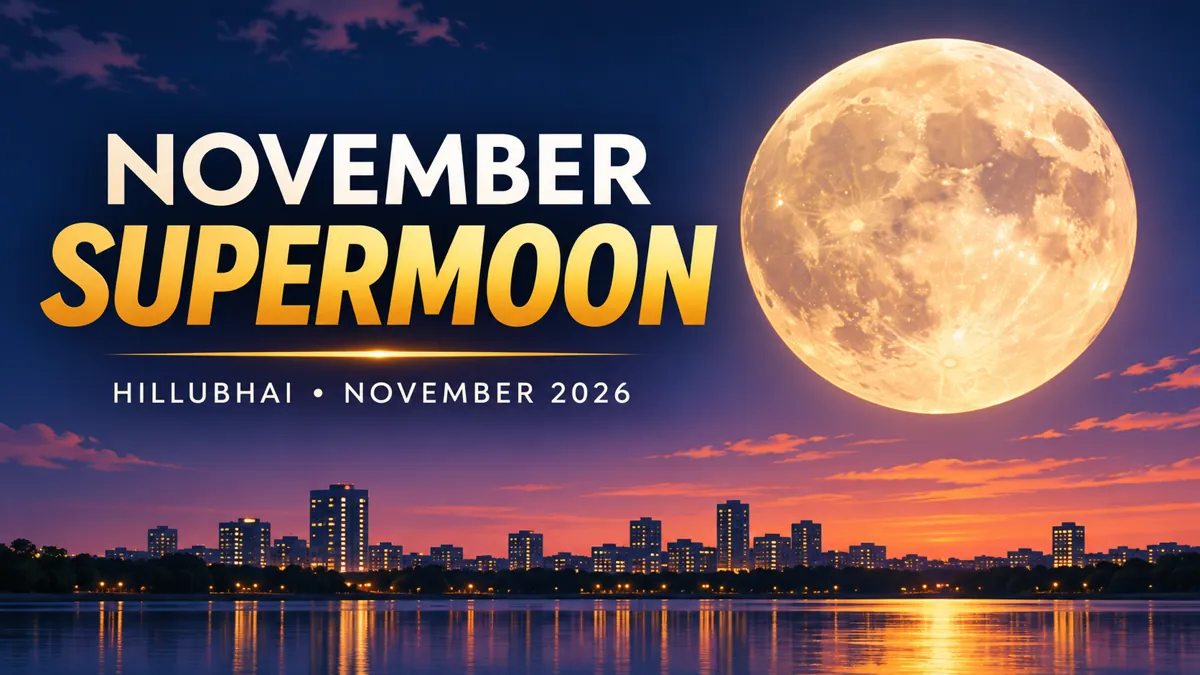
The November 2026 supermoon reached its full-moon peak on November 24 at 14:54 UTC, according to NASA. If you are reading on November 25, that exact moment has already passed, although the Moon can still make an appealing subject in the evening sky when local conditions allow. Before planning an outdoor viewing session, check our Thanksgiving weather and wind-advisory guide alongside your local forecast.
Skywatching • November 2026
The peak was November 24, not November 25
A full moon is an astronomical moment. Your best viewing opportunity depends on moonrise, weather and a clear view of the sky.
November supermoon peak time in the United States
The table converts NASA’s 14:54 UTC peak into several familiar time zones. Every entry below refers to November 24. The peak occurring during daylight in the US does not mean the evening Moon is uninteresting; it means the exact phase time and a practical viewing time are different things.
| Time zone | Peak time | Date |
|---|---|---|
| UTC | 2:54 p.m. | November 24 |
| Eastern Standard Time | 9:54 a.m. | November 24 |
| Central Standard Time | 8:54 a.m. | November 24 |
| Mountain Standard Time | 7:54 a.m. | November 24 |
| Pacific Standard Time | 6:54 a.m. | November 24 |
| India Standard Time | 8:24 p.m. | November 24 |
What makes a full moon a supermoon?
The Moon follows an elliptical orbit, so its distance from Earth changes. A supermoon is a popular term for a full moon occurring relatively close to the near-Earth part of that orbit. NASA notes that it is not an official astronomical term with one universally binding definition.
The practical idea is simple: distance affects apparent size and brightness. The difference can be subtle to an observer without a comparison image. You do not need to see a gigantic Moon or notice an extraordinary change for the event to qualify under the description being used.
Can you still look on November 25?
Yes, provided the Moon is above your local horizon and the sky is clear enough. After the full-moon moment, the phase moves into waning gibbous. The calendar date of the peak is useful information, but it should not turn skywatching into a one-second opportunity that has vanished forever.
Choose a safe place with an unobstructed view and check local moonrise information. Avoid assuming that a time quoted for another city applies to yours. A nearby building or line of trees can also block the view even when a general astronomy forecast says the Moon is up.
Why the Moon can look enormous near the horizon
NASA’s November skywatching guidance explains that the familiar impression of a huge Moon near the horizon involves the Moon illusion. The Moon does not suddenly become physically larger as it climbs. Its apparent relationship with trees, buildings and the distant landscape can make the scene feel particularly dramatic.
That is a good reason to enjoy the view, but it is also a reason to read photographs carefully. A large Moon beside a landmark may involve lens choice, framing or compositing. The thumbnail on this page is an illustrative design and is not a photograph or a scale diagram of the actual sky.
A simple viewing plan
Keep the first session uncomplicated. Find the Moon with your eyes, let everyone have time to look and describe what they notice. Binoculars or a telescope can add detail, but NASA’s viewing guidance makes clear that specialized equipment is not required to appreciate the Moon.
If you are watching with children, turn it into a short observation activity. Ask them to sketch the bright and dark regions or compare the view on two different evenings. Keeping a date beside each sketch makes the changing phase easier to notice than relying on memory alone.
Photograph the Moon without overcomplicating it
NASA’s photography guidance recommends experimenting with exposure and keeping the camera stable. A bright lunar disc can lose detail if the exposure is chosen only for a dark foreground. Take a few different exposures, check the result and adjust rather than assuming one automatic setting will suit every scene.
For a phone photograph, begin with a steady position and a clean lens. Include a recognizable foreground if you want a sense of place, and keep the horizon straight. Describe any substantial edit when sharing the image, especially if you combine separate views or enlarge the Moon beyond its photographed appearance.
Questions readers are asking
Was the peak on November 25?
No. NASA lists the November full supermoon at 14:54 UTC on November 24, 2026.
Do I need a telescope?
No. The unaided-eye view is worthwhile; optical equipment is optional.
Will every location get a clear view?
No. Cloud, local weather, terrain and the Moon’s position affect visibility.
What is the best takeaway for tonight?
Check the local sky and enjoy the view that is actually available. The Moon remains worth observing after the exact full phase, and a modest, honest photograph can preserve the occasion just as well as an exaggerated image.
Reporting checked November 25, 2026. Sources: NASA Supermoons reference; NASA November 2026 skywatching guide; NASA Moon viewing tips; NASA Moon photography guide. Time-zone conversions and planning suggestions by HilluBhai. Featured image: original AI-generated editorial illustration by HilluBhai; not an event photograph.



Post Comment