SpaceX Starship Flight 15: Upper Stage Caught After Orbit, Booster Recovery Falls Short
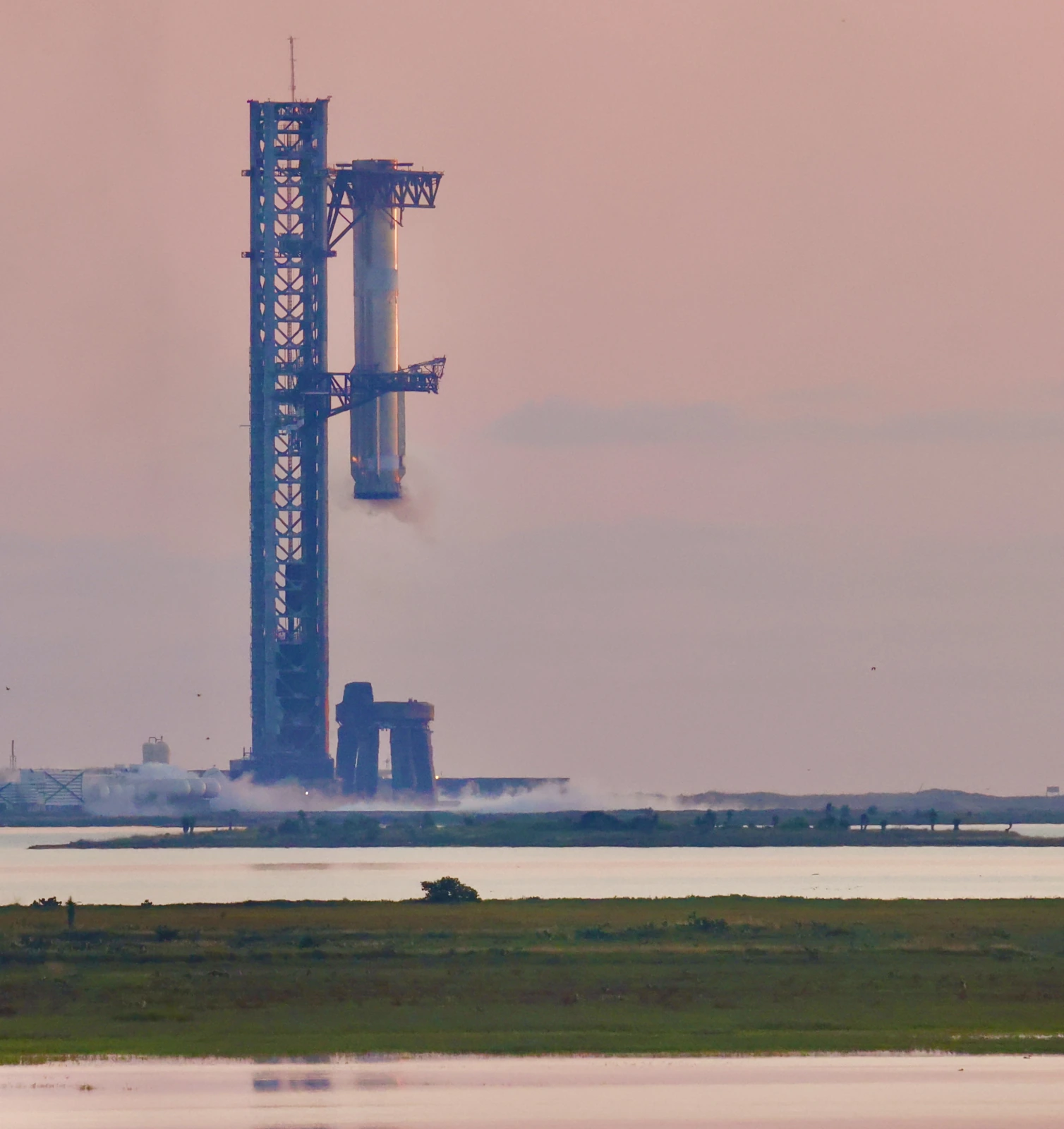
SpaceX caught the Starship upper spacecraft with its launch tower’s mechanical arms after its return from orbit on 14 November, US time. This update in our HilluBhai news updates explains the achievement while keeping it separate from the Super Heavy booster, which was not recovered on the same flight.
Archive photograph: Super Heavy booster after the Flight 5 catch, 13 October 2024; NOT the upper-stage catch on Flight 15 in 2026. Photo: Steve Jurvetson / Wikimedia Commons, CC BY 2.0. Source: commons.wikimedia.org/wiki/File:SpaceX_Starship_Booster_Back_at_its_Perch_IFT-5.jpg. Licence: creativecommons.org/licenses/by/2.0/. Resized and converted to WebP.
What happened on Flight 15?
Starship launched from Starbase, Texas, on 13 November and returned the following day. SpaceX’s post-flight account identifies the mission as Flight 15, while contemporary reporting confirms the first catch of the upper spacecraft after an orbital flight.
| Component | Reported Flight 15 outcome |
|---|---|
| Starship upper stage | Returned from orbit and was caught by tower arms |
| Super Heavy booster | Not recovered at the tower |
| Combined objective | Recovery of both stages was not achieved |
What does “caught in mid-air” mean?
SpaceX’s mission description calls for the returning vehicle to complete a landing burn and be received by the tower’s mechanical arms. The phrase describes a controlled return to launch-site equipment, rather than a rocket being grabbed while travelling at orbital speed.
Starship and Super Heavy are different parts of the same launch system. Distinguishing them is essential: earlier catches of the booster were not earlier catches of the orbital upper spacecraft.
Why is the upper-stage catch important?
The company’s stated goal is rapid reuse of the launch system. Returning a component to the launch site is one part of that programme; inspection, refurbishment and another flight remain separate steps.
A successful catch therefore marks a major recovery test without proving that the vehicle can immediately fly again, carry people safely or meet every future mission requirement.
Why the mission was not a complete double recovery
Associated Press and The Washington Post report that the booster did not return successfully. This prevents the upper-stage achievement from being described as a successful recovery of both halves of the rocket.
Early explanations of a flight anomaly can evolve as telemetry is reviewed. This report does not assign a final root cause to the booster failure.
What comes next for the programme?
The useful next milestones are official inspection findings, flight-data analysis and announcements for later tests. A future mission plan should be distinguished from a completed result, just as a successful recovery should be distinguished from a successful reflight.
The featured photograph is genuine archive material from the Flight 5 booster recovery in October 2024. Its caption explicitly identifies that earlier event; it is not presented as the Flight 15 upper-stage catch.
Three terms that make the result easier to follow
Upper stage: the spacecraft that continues beyond the booster phase and carries out the later portion of the mission. Booster: the lower stage used during the initial ascent. Recovery: bringing a component back in a condition and location where it can be examined for possible reuse.
These labels matter because the name Starship is often used for both the full system and the upper vehicle. A report that says “the rocket was caught” can leave readers uncertain about which hardware returned. The component table above resolves that ambiguity for Flight 15.
Why orbit changes the recovery challenge
A component returning from an orbital mission has a different flight history from a booster returning shortly after separation. SpaceX’s mission description sets out separate sequences for the booster and the ship, rather than treating them as two identical landings.
The demonstrated result should therefore be described at the level actually achieved: an upper-stage catch following its orbital flight. That is a more informative statement than a broad claim that all recovery problems have been solved.
What would demonstrate rapid reuse?
Recovery creates the opportunity to inspect a vehicle. Rapid reuse would additionally require evidence about its condition, the work needed between missions and a later flight. Those are measurable stages that can be reported when the company publishes results.
The distinction is similar to the difference between a successful test and an established operating routine. A test can answer an important question while leaving others for the next round. Describing the remaining work does not diminish the achievement; it identifies what the achievement establishes.
How to recognise a plan rather than a result
Mission pages can retain language written before launch, including target dates and intended manoeuvres. Post-flight updates and the recorded outcome are needed to confirm which objectives were actually met. Readers should check whether a sentence says a vehicle “will attempt” an action or reports that it completed the action.
Flight 15 is a clear example because the initial objective included recovering both stages, while the result was mixed. Reporting only the original plan would overstate success; reporting only the booster loss would omit the upper-stage milestone.
Why the archive caption is prominent
The 2024 photograph shows real recovery hardware from an earlier flight. It is useful background for understanding the tower system, but it cannot document a later event. Its date and component are stated both in the image caption and in the article so that the picture supports the explanation without changing the meaning of the 2026 result.
Reporting sources: SpaceX Flight 15 mission and post-flight account; Associated Press and The Washington Post reporting, 14–15 November 2026. US local dates are used for launch and recovery.


Post Comment