Ethiopian Food: A Flavorful Beginner’s Guide and 3 Easy Recipes to Make at Home
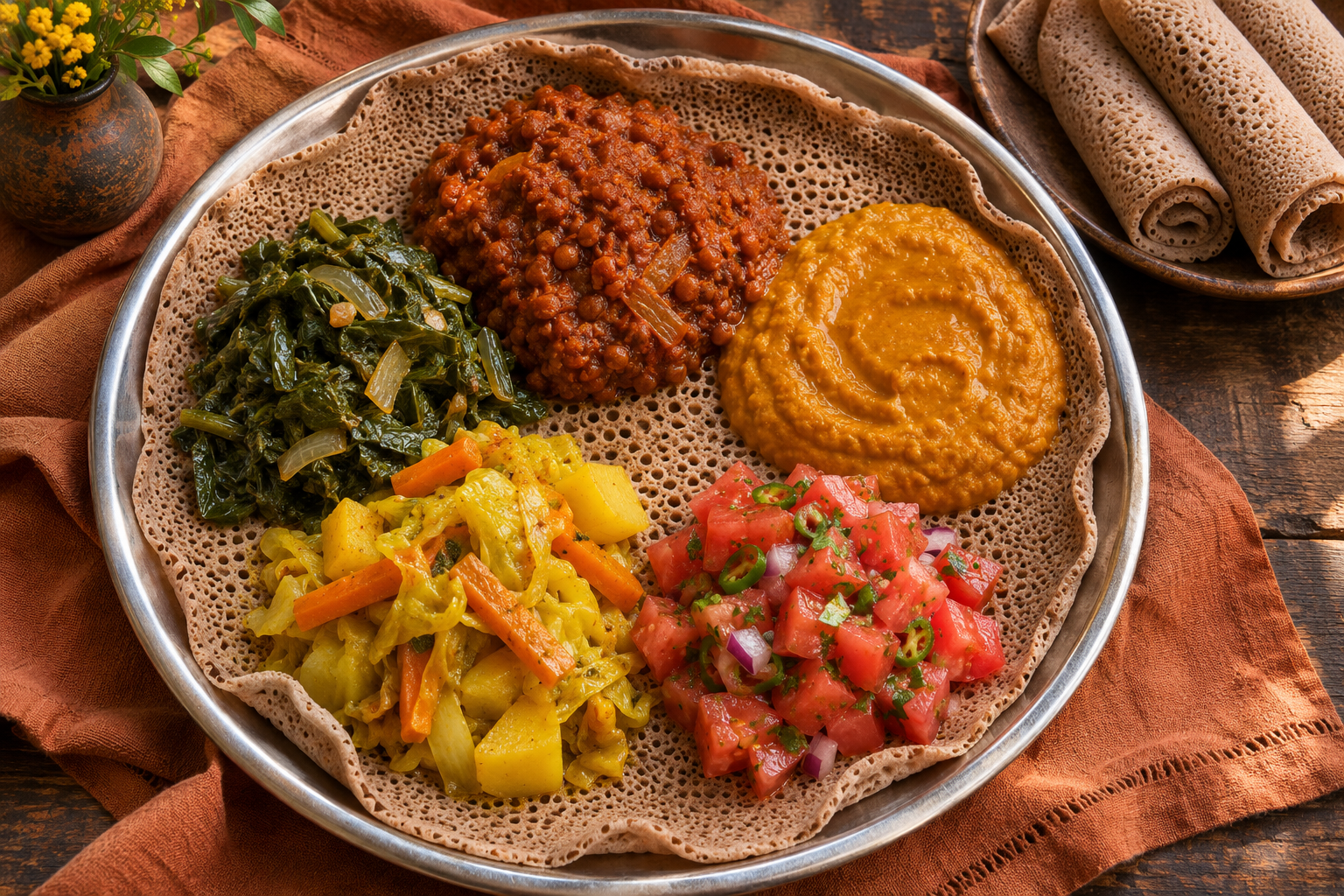
Ethiopian food brings together tangy injera, richly seasoned stews, tender greens and beautifully contrasting textures. If you are exploring it for the first time in the United States, this guide will help you understand the menu, shop for useful ingredients and cook three approachable Ethiopian-inspired dishes at home.
A good first Ethiopian meal is an invitation to compare flavors. One bite might combine a bright, sour edge from the bread with a deep red lentil stew; the next might be mellow cabbage and potatoes. You do not have to order the hottest dish or cook a complicated feast to appreciate that variety. Start with a small selection and notice how the elements work together.
There is no single plate that represents every Ethiopian household or region. Recipes, names and spice preferences vary, and some dishes are also part of neighboring Eritrean food traditions. The familiar restaurant platter is a useful introduction, rather than a complete picture of a diverse cuisine.
What is Ethiopian food? Start with these dishes
Injera is a fermented flatbread with a soft, porous surface, often made with teff. It frequently serves as both the base of a meal and the bread used to pick up small portions. The sauces soak into it as you eat. Wat and wot are spellings you may see for stews; restaurant menus also vary in how they spell other dish names.
| Food | What to expect | A useful first question |
|---|---|---|
| Injera | Tangy, flexible fermented flatbread | Which flours are used? |
| Misir wot | Red lentils with a berbere-seasoned sauce | How hot is this version? |
| Shiro | Smooth stew made with chickpea or other pulse flour | Is it prepared with oil or butter? |
| Gomen | Cooked leafy greens | Is the preparation meat-free? |
| Atkilt wat / tikil gomen | Often a mild cabbage, carrot and potato dish | What vegetables are included today? |
| Doro wat | A deeply seasoned chicken stew, often served with egg | How large is the portion? |
| Tibs | Sautéed meat in a variety of preparations | Which meat and spice level? |
For a first restaurant order, consider a vegetable combination plate and, if you eat meat, one additional meat dish to share. Ask the server which preparations offer a gentle introduction and which carry more heat. This is more useful than assuming that every red stew or every restaurant’s “medium” means the same thing.
How to eat a shared injera platter
With clean hands, tear off a manageable piece of injera and use it to pick up a little food. Take a portion you can comfortably eat rather than trying to lift a large mound. If a shared platter is unfamiliar, follow your host’s lead or ask the server for guidance. It is also fine to request a plate or utensils if that makes the meal more accessible for you.
Enjoy the bread underneath the stews as well as the extra rolls served alongside. Sharing works best when everyone has enough space and can reach a portion comfortably. The point is to enjoy the food and company, rather than turn the meal into a test of technique.
A practical Ethiopian food shopping list for US kitchens
You can find much of the produce and the lentils in a regular supermarket. For berbere, injera and prepared shiro powder, an Ethiopian or Eritrean grocery can be especially useful. Ask how an unfamiliar ingredient is normally used, and read its label before deciding how much to add.
- Split red lentils: choose the small orange-red split variety for the recipe below.
- Onions, garlic and fresh ginger: useful foundations for all three dishes.
- Berbere: a spice blend whose heat and ingredients vary by maker. It is more complex than plain chili powder.
- Collard greens: readily available in many US stores; kale is a practical variation with a different texture.
- Cabbage, carrots and potatoes: inexpensive ingredients for a mild side dish.
- Neutral oil: keeps the three home adaptations below plant-based.
- Injera: buying it ready-made lets you focus on the stews during your first cooking session.
Niter kibbeh is spiced clarified butter used in many preparations. It is different from plain butter, and replacing it with oil changes the flavor. Oil is nevertheless a practical choice for these vegetable-focused home recipes. If you buy a prepared spice blend, check whether it already contains salt before seasoning the pot.
Three Ethiopian food recipes for a manageable first meal
The following are simplified home adaptations, with US cups and spoons, inspired by misir wot, gomen and cabbage-based vegetable dishes. They are not presented as one definitive traditional method, and have not been independently kitchen-tested for this article. Times are estimates: use the texture cues, and adjust liquid as your cookware requires. Each makes approximately four side portions.
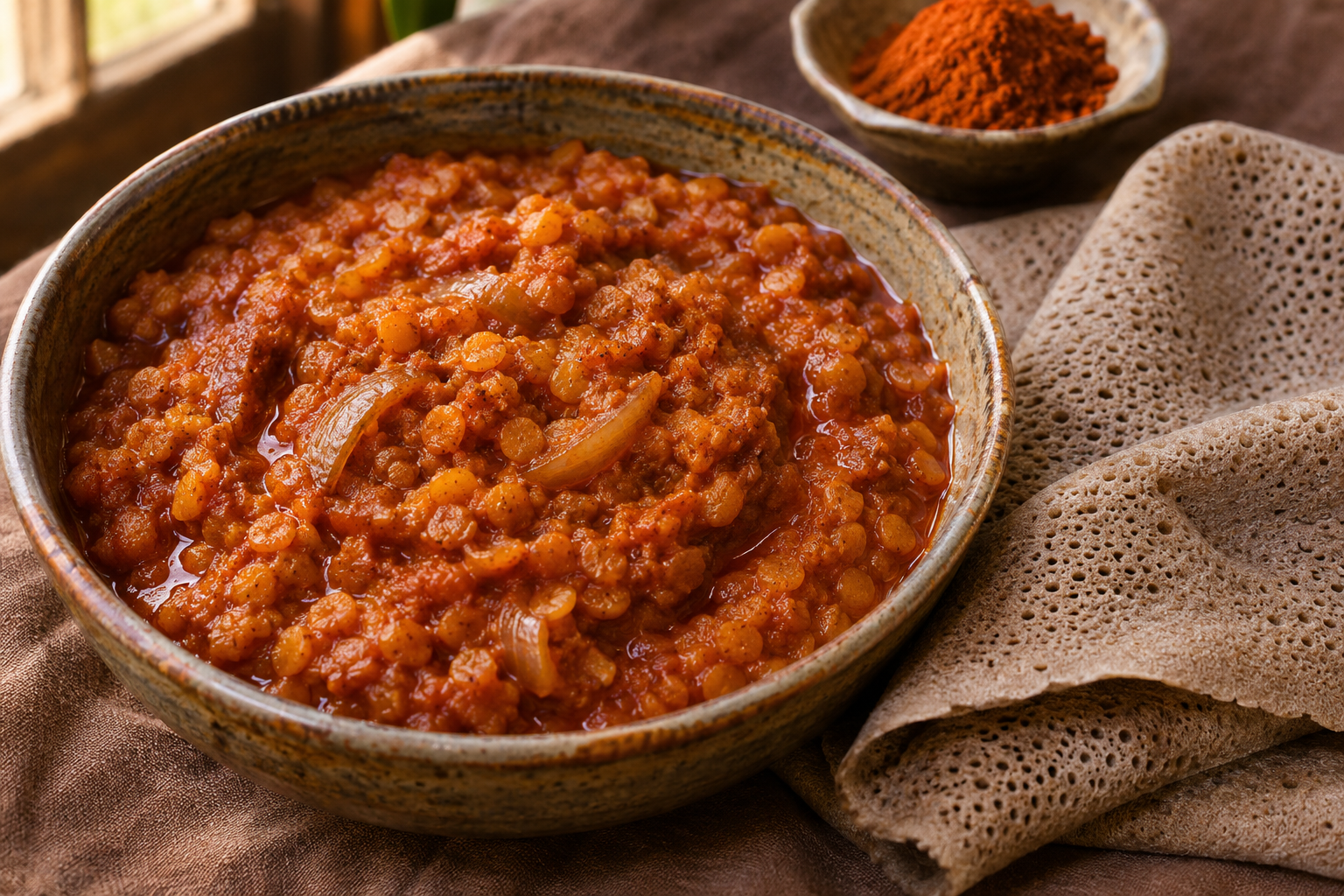
1. Berbere red lentils inspired by misir wot
This is the boldest component of the meal. Cook the onion until thoroughly soft before adding the lentils; rushing that stage can leave a sharp onion flavor in the finished stew.
Ingredients
- 1 cup dry split red lentils, picked over and rinsed
- 1 large yellow or red onion, very finely chopped
- 3 tablespoons neutral vegetable oil
- 3 garlic cloves, minced
- 2 teaspoons grated fresh ginger
- 2 teaspoons berbere to start, or more according to the blend’s heat
- 1 tablespoon tomato paste
- 2½ cups water, plus more as needed
- ½ teaspoon fine salt to start, adjusted to taste
Method
- Warm the oil in a heavy saucepan over medium-low heat. Add the onion and cook for 15–20 minutes, stirring often, until soft and reduced. Add a spoonful of water if it sticks; avoid scorching.
- Add garlic and ginger. Stir for about 1 minute. Add berbere and tomato paste, reduce the heat and cook for 2 minutes, using a splash of water to keep the spices from burning.
- Stir in the rinsed lentils, 2½ cups water and the initial salt. Bring to a gentle boil, then reduce to a steady simmer.
- Cook partially covered for roughly 20–30 minutes, stirring regularly, until the lentils are tender and beginning to break down. Add hot water a little at a time if the bottom becomes dry before they soften.
- Taste and adjust salt. Let the stew stand for 5 minutes. It should be thick enough to spoon, without being a dry paste.
Heat adjustment: If your berbere is very hot, begin with 1 teaspoon. For a future batch, increase it during the spice-cooking stage rather than stirring a large amount of raw spice into the finished food. Changing the blend can change the result more than changing the amount slightly.
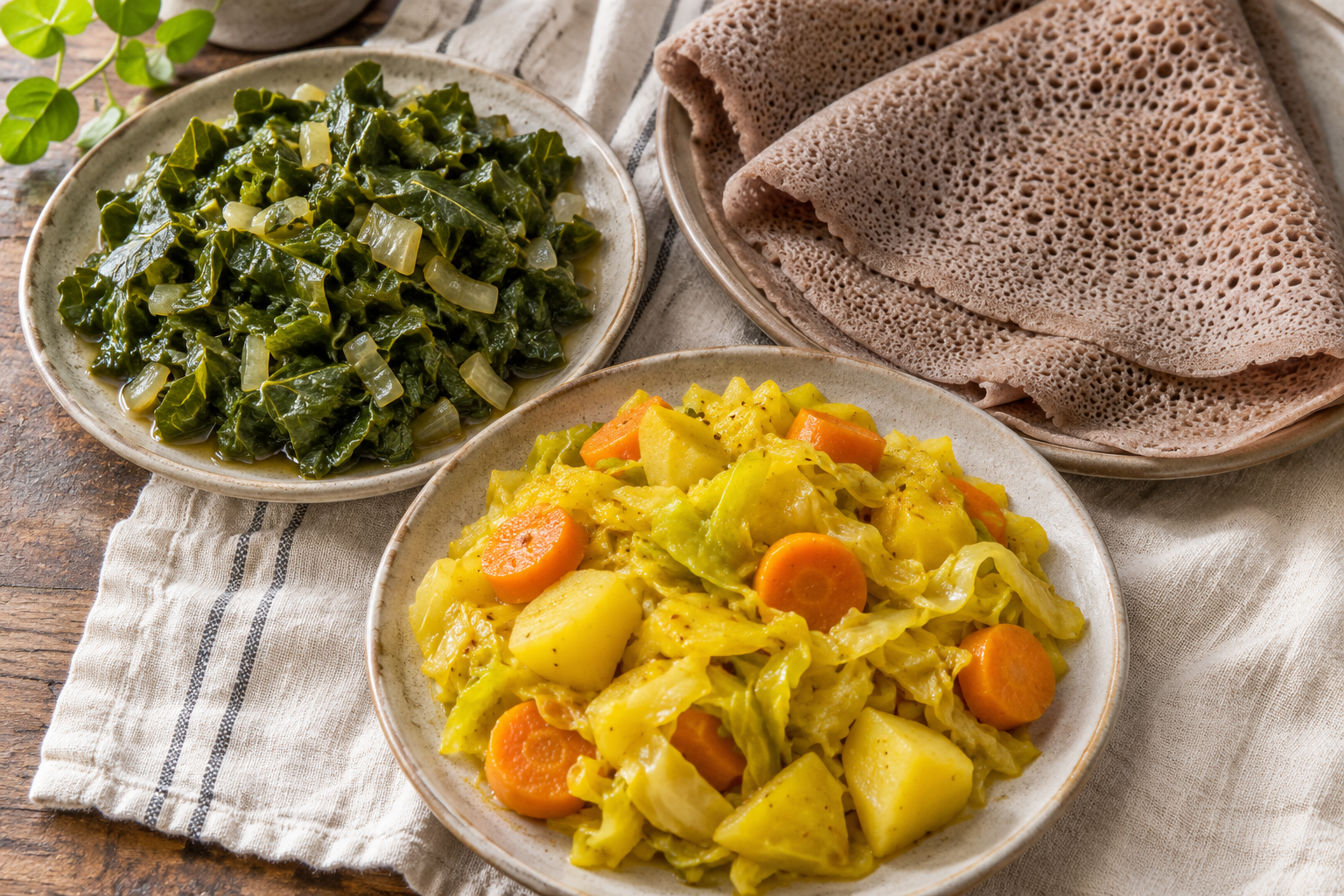
2. Ginger-garlic collard greens inspired by gomen
Ingredients
- 1 pound collard greens
- 2 tablespoons neutral oil
- 1 medium onion, finely chopped
- 3 garlic cloves, minced
- 2 teaspoons grated fresh ginger
- ½ cup water, plus more as needed
- ½ teaspoon fine salt to start
- Optional: 1 small green chili, finely chopped
Method
- Wash the greens thoroughly. Remove the tough central stems and slice the leaves into narrow ribbons.
- Heat the oil in a deep pan over medium heat. Soften the onion for 7–10 minutes, stirring, then add garlic and ginger for about 1 minute.
- Add the greens in batches, turning them as they wilt. Add water, salt and optional chili.
- Cover and cook over medium-low heat for 20–30 minutes, stirring occasionally. Add a splash of water if needed. The leaves should become tender, not merely wilted.
- Uncover and cook off excess liquid for a few minutes. Taste a piece of leaf before adjusting salt and serving.
Texture tip: Older, thicker collard leaves may need longer. If using kale, check earlier. The aim is tender greens you can pick up with bread, not a pool of liquid.
3. Golden cabbage, carrots and potatoes
This gentle, turmeric-colored side is inspired by cabbage-based dishes often called atkilt wat or tikil gomen on menus. It gives your meal a softer flavor beside the berbere lentils.
Ingredients
- 2 tablespoons neutral oil
- 1 medium onion, sliced thinly
- 2 garlic cloves, minced
- 1 teaspoon grated fresh ginger
- ½ teaspoon ground turmeric
- 2 medium carrots, cut into ¼-inch slices
- 2 medium Yukon Gold potatoes, cut into ½-inch cubes
- ½ small green cabbage, cored and sliced, about 4 packed cups
- ½ cup water, plus a little more if needed
- ½ teaspoon fine salt to start
Method
- Warm the oil in a wide lidded pan over medium heat. Cook the onion for 7–8 minutes until softened.
- Add garlic, ginger and turmeric. Stir for 30 seconds, then add carrots and potatoes.
- Add the water and salt. Cover, lower the heat and cook for about 10 minutes, stirring once.
- Add cabbage and turn it through the vegetables. Cover and cook for another 15–20 minutes, stirring occasionally. Add small splashes of water if the pan dries out.
- Check a potato cube with a fork. When tender, uncover briefly if necessary to reduce excess moisture. Adjust the salt and serve while the vegetables still hold their shape.
Even cooking: Keep potato pieces similar in size. If the cabbage is ready before the potatoes, the potato cubes were probably too large or needed a longer head start.
How to put the meal together without rushing
Read all three recipes before starting. Chop the onion, garlic and ginger for every dish, keeping each recipe’s quantities separate. Wash and slice the collards, then cut the carrots, potatoes and cabbage. Having these tasks done makes it easier to watch the lentil pot instead of repeatedly leaving it to chop something.
Start the lentils first, since their onion base takes time. Once they are simmering, begin the vegetable pan. Cook the greens alongside if you have a third burner; otherwise finish one dish and keep it warm briefly while making the next. Rewarm bought injera according to the maker’s directions.
For serving, arrange small portions on a large round of injera or use separate serving bowls. A modest first portion makes it easier for guests to discover which flavors they enjoy and return for more. Put extra bread within reach, and offer water and napkins before everyone sits down.
Common mistakes that make the food less satisfying
- Burning the spice paste: use low heat and a little water if the mixture catches. Burnt spices add bitterness that more seasoning will not fix.
- Using the clock alone: lentil age, vegetable size and pan width all affect cooking. Check tenderness.
- Adding too much water at once: begin with the listed amount and adjust gradually.
- Assuming every dish should be hot: mild vegetables provide contrast rather than a missing ingredient.
- Changing several things in the first attempt: make notes, then adjust one element the next time.
Leftovers and reheating
Refrigerate perishable leftovers within 2 hours of cooking, or within 1 hour when the surrounding temperature is above 90°F. Divide food into shallow containers so it cools promptly; do not leave a large pot on the counter until completely cold. Keep the refrigerator at 40°F or below.
Use refrigerated leftovers within 3–4 days, or freeze for longer storage. Reheat leftovers to 165°F, checking with a food thermometer. A splash of water can loosen thick lentils during reheating. Store injera according to its maker’s instructions, separately from wet stews when practical.
Ethiopian food FAQs
Is Ethiopian food always spicy?
No. A meal may include hot stews alongside mild greens and vegetables. Ask about each dish and the particular restaurant’s spice level rather than judging the whole cuisine from one bite.
Are Ethiopian food recipes beginner-friendly?
Many vegetable and lentil preparations use familiar cookware and ingredients. Start with one stew and purchased injera, then add a second dish once you understand the timing.
Is injera always gluten-free?
Do not assume so. Some injera uses flour blends that include wheat. Check ingredients and preparation practices with the maker, especially when avoiding gluten or managing an allergy.
Can the meal be vegan?
The three adaptations here use oil and no animal ingredients. When ordering elsewhere, ask about butter, meat stock and the specific preparation; a vegetable dish’s name alone does not confirm every ingredient.
What is the easiest dish to start with?
The golden cabbage and potato dish needs no specialty blend. For a more distinctive spice introduction, try the lentils with a small amount of berbere and adjust on your next batch.
Should I make injera from scratch immediately?
You can, but fermentation and pan technique add a separate learning task. Buying it for your first meal lets you focus on the stews. Later, use a detailed injera recipe from an experienced Ethiopian cook.
A first meal worth repeating
Choose one dish, buy a spice blend you can learn and give the cooking enough time. The best next step is not necessarily a larger spread: it may be a second batch with softer onions, a better crop of greens or bread from a local maker. Small improvements make home cooking more enjoyable while leaving room to keep learning about Ethiopian food.
Sources and recipe notes
Dish descriptions and context were checked against the InjeraDAO food guide and Ethiopia food guide. Preparation references include Meerath’s misir wot recipe, Gurmestan’s gomen recipe and atkilt wat recipe. The methods above are simplified home adaptations with their own quantities and instructions.
Storage guidance: USDA leftover guidance, USDA reheating guidance and CDC food safety guidance. All three food images are AI-generated illustrations and are not evidence of kitchen testing.


Post Comment